You hand someone your card, and within seconds they’ve formed an opinion about your business without even meaning to. One that’s flimsy or oddly shaped gets forgotten just as fast. But a business card cut to the right size slides into a wallet or card holder easily and stays there for weeks waiting to be found again.
That’s why size isn’t just a design detail. It actually decides whether your card gets kept or tossed. So let’s figure out what the size of a business card is and why it became the standard everyone follows today.
The Standard Business Card Size
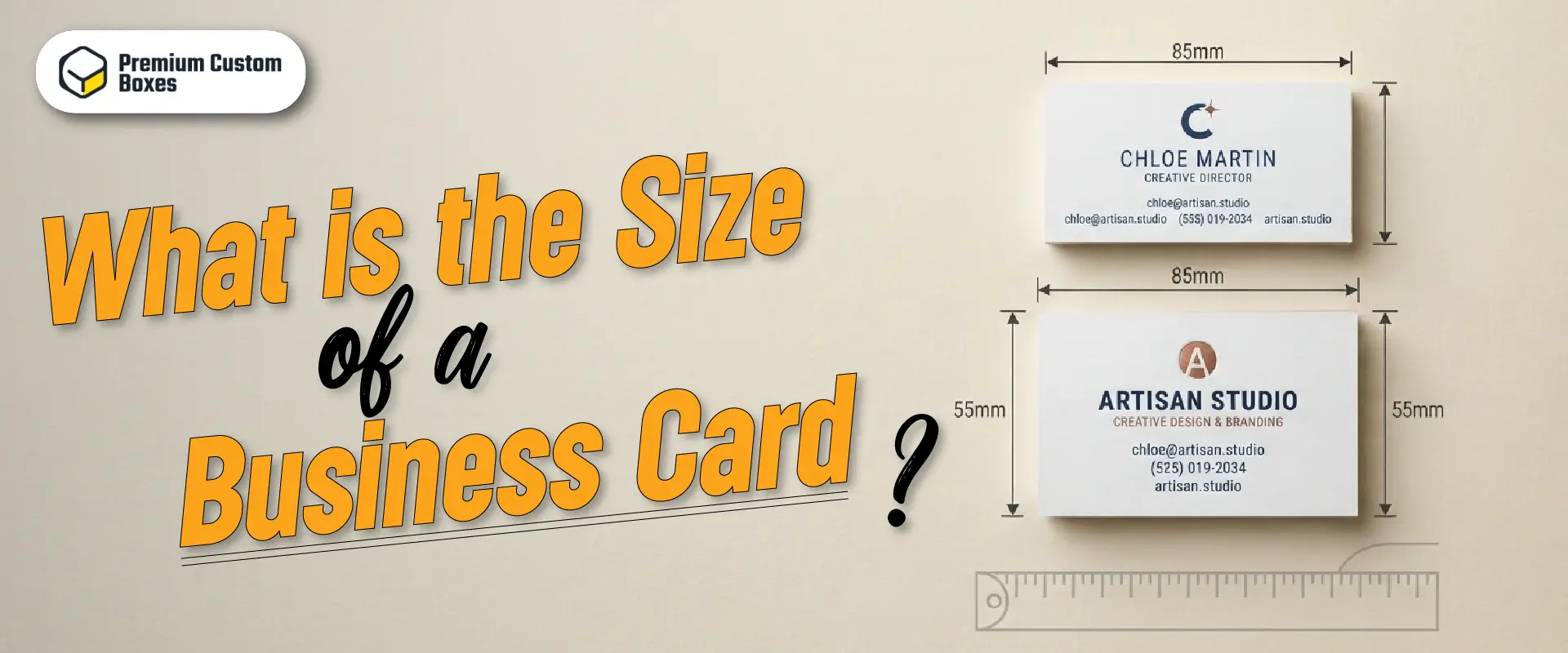
Most business cards printed in North America stick to one size. The standard business card size is 3.5 x 2 inches (approximately 89 x 51mm). Go to any office in Toronto or a trade show in Vancouver, and you’ll spot this size again and again. There’s a good reason for that. It fits right into wallets and card holders without any folding or trimming needed. Printers build their templates around this exact size too, so ordering in bulk stays simple. Even Canva and Photoshop have this dimension set as the default for business card templates.
Honestly, this size has become the default nobody even questions anymore. When you’re building a card and want it to come across sharp and professional from the very first glance. It doesn’t try to be flashy. It doesn’t chase attention. That’s why it never fell out of style.
Business Card Sizes Around the World
North America isn’t the only place with its own standard. Different regions follow their own sizes. It matters if your cards are heading to an international audience.
- United Kingdom: Cards run 3.5 x 2.16 inches but are measured as 85 x 55mm so they fit local wallets without any trimming.
- Europe: Most countries follow that same 85 x 55mm size to make it the go-to across the continent.
- Japan: Cards come in slightly smaller at 91 x 55mm and fit right into a business culture where cards get exchanged constantly with real formality.
- Australia: Sticks close to the European 90 x 55 mm size so cards feel familiar across most business settings there.
Getting the size wrong for the region you’re printing in can mean a card that doesn’t sit right in local wallets or card holders. So it always helps to check what’s standard where your cards are actually going to be used.
Bleed, Safe Zone and Trim Size Explained
Print shops throw around three terms a lot, and if you don’t know them, your card can come out looking off. It can sound complex, but it’s actually pretty simple once you break it down.
Here’s what each one means:
Bleed
Extra space added around your design, usually about 1/8 of an inch (3 mm). It gets sliced off during cutting. Skip it, and you risk thin white lines along the edges where your background colour didn’t quite reach.
Trim Size
This is just the final size of your card once it’s been cut down. So 3.5 x 2 inches or whatever size fits your region.
Safe Zone
Sits a little inside the trim line, and it’s where your text, logo, and contact details need to live. If the cutter shifts even slightly, anything outside that zone risks getting sliced right through.
Skip any one of these three and your card ends up looking amateur. That’s the kind of small mistake that instantly tells people a card wasn’t made by someone who knew what they were doing. And if you’re handing cards out alongside brochures or folders, a pocket folder with a business card slit keeps everything together and looking put together rather than scattered.
Choose the Right Custom Business Card Size That Fits Your Business
Not every business sticks to the standard size, and there are solid reasons some choose to go custom instead. Here’s a look at the main options and when each one actually makes sense.
Square Cards
A square card breaks away from the usual rectangle shape and instantly stands out in a stack of regular cards. It works best for creative fields where the card itself needs to reflect a bold visual identity rather than just hold contact details. Here’s what makes them worth considering:
- Grabs attention purely from its unusual shape.
- Costs more to print since it needs custom die-cutting.
- Pairs well with a business card box sized to match, so the presentation feels just as sharp as the card itself.
Mini Cards
Mini cards run smaller than the standard size and are built for speed rather than detail. They’re handed out fast at events or used when only a name and one contact method need to be shared. Because of this compact design, they offer distinct practical advantages and a few clear limitations. Here is what that means for your business in Canada:
- Cheaper to print in bulk due to smaller material use.
- Easy to carry a large stack in a pocket or bag.
- Works well for coupon codes or social handles.
- Not ideal if you need to fit a full address or multiple numbers.
Fold Over Cards
A fold-over card opens up like a tiny booklet, giving double the space of a regular flat card. This makes it useful for businesses that need to share more than just contact details on one card. They are perfect for:
- Extra surface area for a menu or price list.
- Feels more premium and memorable when handed over.
- Common choice for restaurants, spas, and service businesses.
- Higher printing cost due to the folding and extra material.
Rounded Corner Cards
This keeps the standard card 3.5 x 2-inch layout but replaces the sharp corners with a smooth curve. It’s a small design shift that changes how the card feels without changing how it fits anywhere. While it requires a minor budget adjustment, this curve elevates both the tactile experience and the presentation value:
- Softer, more premium feel in hand.
- Still fits standard wallets and card holders.
- Small added printing cost over regular square corners.
- Works well alongside gift card boxes when cards are being handed out as part of a gift or bundle.
Conclusion
So, you know now what the size of business cards is. Most Canadian businesses just stick with 3.5 x 2 inches. It’s the safe pick. Slides right into any wallet or card holder without a fuss. If you want something that stands out more, custom shapes or rounded edges are well worth the investment.
Remember: They do come with a slightly higher printing cost. Don’t overlook the technical details of whichever shape you choose.
Get the bleed, trim, and safe zone right, and your final print looks sharp instead of sloppy. Once your design’s locked in, Premium Custom Boxes CA has the packaging and gift card boxes to match your exact card style.