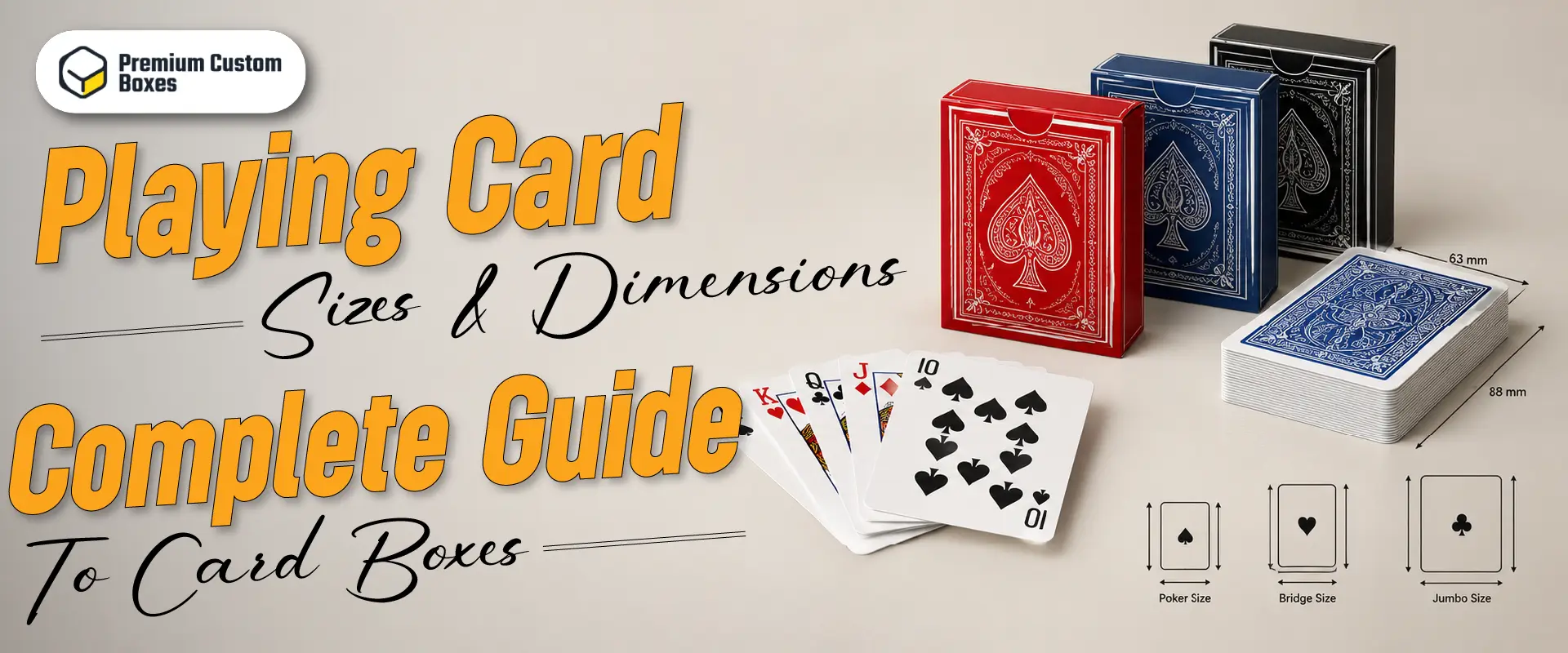
Playing cards are one of the most favourite and highly popular indoor pastimes for entertainment and relaxation that people love in leisure or while sitting idle.
According to Tech Sci Research, the global playing cards market is predicted to expand from $32.45 billion in 2025 to $48.24 billion by 2031. This high demand offers a lucrative opportunity for business owners and investors looking to capitalize on a stable industry. Wait.
To launch a successful playing card business, it is indispensable to understand the industry’s basic principles. That’s right. Choosing the proper card size ensures a comfortable fit for your game. Fret not.
This guide will explain everything you need to know about playing card sizes and dimensions. We will explore different types of cards and their sizes. You will also learn where you can customize them. Let’s begin!
What are the Standard Playing Card Sizes
Poker size is the standard playing card size. The exact measurements of these cards are here; you should know them when you are designing or printing them.
- Inches: 2.5″ x 3.5″
- Millimeters: 63.5 x 88.9 mm
- Centimeters: 6.35 x 8.89 cm
- Pixels (300 DPI): 750 x 1050 px
Everyday Canadians rely on the metric system (mm/cm). The above-mentioned dimensions are used worldwide. Whether there are home games or standard card decks, these sizes are the standard.
Dimensions and Sizes by Playing Card Type
All types of playing cards look similar in a deck. But the actual measurements tell a different story. It’s because one size does not fit all cards. The dimensions of cards vary. To understand why cards feel different in hand, we must look at the exact specifications. For this, we have listed the dimensions of different types of playing cards so you can see how size changes the entire game.
Miniature Playing Cards
Mini cards are slim and measure 1.75″ by 2.5″ (45mm by 64mm). They come in a small size and are used for playing multiple games during travel or in a small group. These miniature playing cards are recyclable and cost-effective as compared to others that require much material to produce. The best thing about these mini-sized cards is that they are easy to fit in your pocket.
Standard Playing Cards
The standard playing card, with dimensions of 3.5″ x 2.5″ (63.5 x 89 mm), goes in the hand easily and makes players feel comfortable. These cards are used to play a variety of games, including:
- Rummy
- Poker
- Golf
Poker Cards
A standard poker card set of a 52-card deck is a popular choice that is widely played. Most of the people are aware of these cards. With a measurement of 3.5″ x 2.5″ (63.5 x 89 mm), poker playing cards are the favourite among friends and family gatherings.
Tarot Playing Cards
Measuring 2.75 inches by 4.75 inches (70 mm × 120 mm), tarot cards are larger than conventional poker cards. The expanded format of these cards is intentional. This card size provides enough space to showcase detailed imagery and symbolic illustrations.
Bridge Playing Cards
Bridge playing card size is 2.25 by 3.5 inches (57 by 89 mm). They are 0.25 inches narrower than traditional poker card size and are much easier to hold and manage when holding a large hand of 13 or more cards.
Bicycle Playing Cards
Bicycle playing cards debuted in 1885 is the leading manufacturer of standard playing cards. With dimensions of 2.5″ in width and 3.5″ in height (64 mm x 89 mm), this premier and oldest playing card brand is known worldwide for its excellent quality and smooth handling. They offer a diverse selection of styles, ranging from classic and vintage designs to innovative and modern decks.
Square Playing Cards
Square playing cards come in two different dimensions: 2.5″ × 2.5″ (6.35 × 6.35 cm) and 3″ × 3″ (7.62 × 7.62 cm). Graphic designers can choose the smaller 2.5″ size for children’s games and grid-style layouts. The larger card size format of 3″ is popular for trivia decks and educational cards.
European Playing Cards
European card sizes are 2.4″ × 3.8″ (61 mm × 97 mm). These European playing card dimensions are a bit narrower and longer than standard card decks. These cards combine English and French design influences. They offer a distinct aesthetic and handling experience compared to traditional international cards.
MTG (Magic The Gathering) Playing Cards
Printed with personalized designs and featuring a spell or character on each card, MTG playing cards, with dimensions of 2.5 inches wide x 3.5 inches high, are similar to standard and poker cards
Jumbo Playing Cards
Jumbo playing cards measure 3.5″ x 5″ (88.9 mm x 127 mm) come in two different formats:
- Jumbo Index cards feature extra-large numbers and suit symbols for high visibility.
- Giant/Oversized cards are large novelty decks designed for magic tricks and large group games.
Playing Card Size Comparison
Most playing cards look identical at a glance. But not all decks are dealt equal. From poker tables to magic stages, slight differences in card dimensions in width and height completely change their purpose, how you play and shuffle. Let’s take a closer look at the exact measurements.
| Card Type | Sizes (inches) | Sizes (mm) | Sizes (cm) | Pixels (300 DPI) |
| Miniature | 1.75 x 2.5 | 45 x 64 | 4.5 x 6.4 | 525 x 750 |
| Bridge | 2.25 x 3.5 | 57.2 x 88.9 | 5.72 x 8.89 | 675 x 1050 |
| Poker (Standard) | 2.5 x 3.5 | 63.5 x 88.9 | 6.35 x 8.89 | 750 x 1050 |
| Tarot | 2.75 x 4.75 | 70 x 120 | 7 x 12 | 825 x 1425 |
| Square | 3 x 3 | 76.2 x 76.2 | 7.62 x 7.62 | 900 x 900 |
| Jumbo | 3.5 x 5 | 88.9 x 127 | 8.89 x 12.7 | 1050 x 1500 |
Thickness and Paper Weight of Playing Cards
Have you ever noticed what makes a deck of cards feel ‘just right’ in your hands while other cards slip right through? The secret lies in playing card thickness, which varies and depends on the material. Playing card quality and strength depend on thickness (0.20 to 0.35 mm / 200–350 GSM). Premium cards feature black-core or blue-core paper combined with a textured air-cushion finish for superior shuffling flexibility. This helps you determine the quality of the card and how well the deck shuffles and holds up over hours of play. If we talk about the cardboard, a variety of materials are used to create playing cards. The most commonly used materials are:
- Plastic-coated cardstock
- Printed waterproof vinyl
The thickness of cards varies. However, you can pick the one that you need. Take a look at some card thicknesses to make things clear.
- 16 pt cardstock (for general cards)
- 22 pt (for standard-quality cards)
- 32 pt (for premium playing cards)
How to Choose the Right Size of Custom Playing Cards
When it comes to picking a deck for your next game night, the card size matters. It is crucial for both player comfort and game compatibility. A difference of a few millimetres can change how cards feel in your hand. The poker and bridge sizes are the standards. Finding the perfect fit card depends on your intended card game, no matter whether you plan to perform magic tricks or sleight of hand. You must understand the standard dimensions and their purposes. This will ensure you select a deck that feels natural and enhances your gameplay.
How to Set Up Your Playing Card Layout for Print
When designing your 52-card deck, configure your digital canvas to a 300 DPI Resolution in a CMYK Color Profile to ensure colour-accurate printing. Your layout must account for three critical boundaries:
- Trim Line delivers the exact physical dimensions of the finished card.
- Bleed Line extends 3mm outward to ensure artwork covers the edges during mechanical cutting.
- Inner Safe Zone: a 3mm margin where all text and symbols must remain to avoid accidental trimming.
Where to Personalize The Sizes of Playing Cards
The dimensions of playing cards are clear. Right. Now, let’s explore where to customize and get playing cards. Partner with the leading packaging manufacturer, Premium Custom Boxes CA, which offers full customization freedom to clients. Whether you need custom playing card boxes or sleeves, free design support and 3D mockups are available to get them according to your requirements.
Conclusion
Understanding the playing card sizes and dimensions accurately can help you craft cards in the exact size for your business. From standard playing card box dimensions and types of cards with standard sizes to customization and global market value, we have covered many aspects of playing cards through this guide to help you make an educated decision while designing and printing. If you are looking for a custom packaging solution to pack these playing cards, contact Premium Custom Boxes CA, where you can enjoy a free design consultation and the best rates with free shipping service within Canada. An online quotation form is also available to help you submit your request.