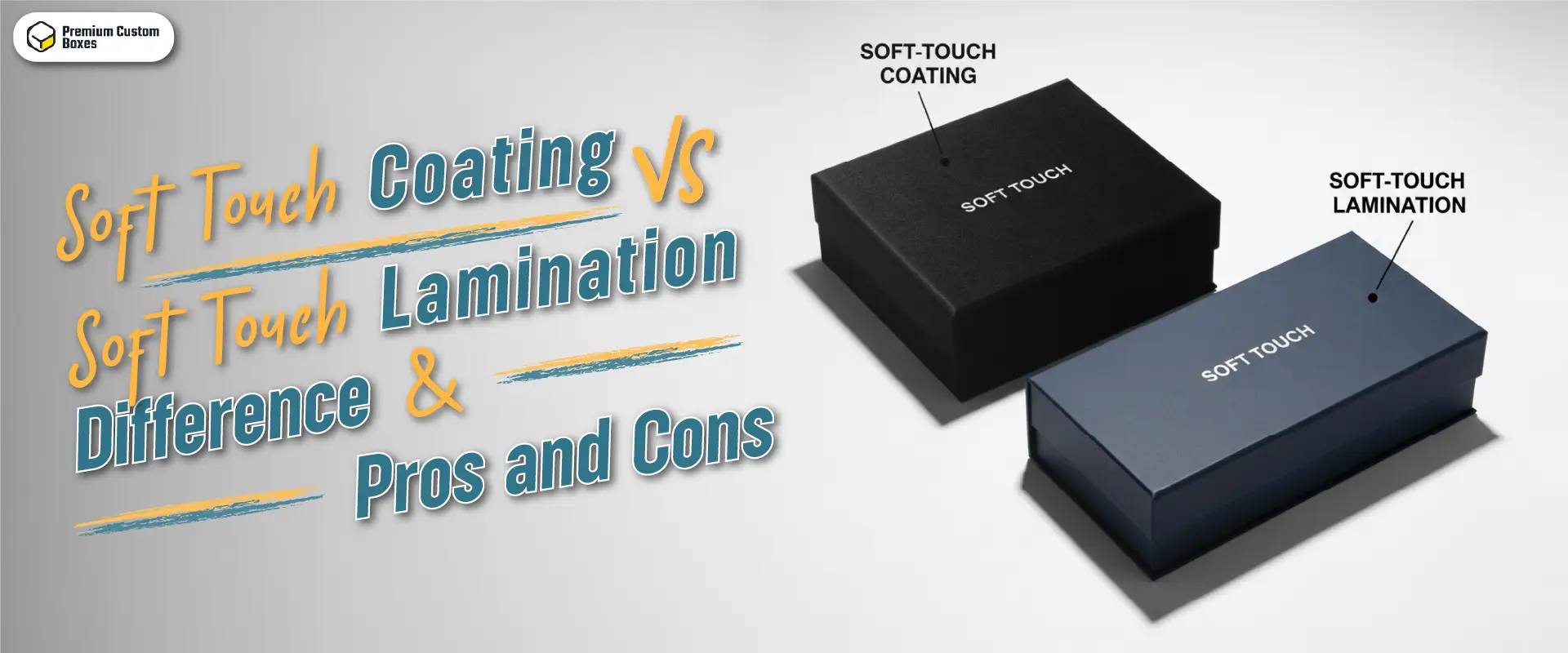
The printing and packaging world is fully agreed upon on the effectiveness of “soft touch” coatings. This term is the type of finish that integrates a smooth feel to a printed material. Several packaging brands focus on aesthetics to attract more customers. But here is a reality: soft touch lamination and coatings touch the senses of customers. However, there is a difference between soft touch coating and soft touch lamination, which we think you should understand.
Both soft touch coating and soft touch lamination remain finishing techniques that transform the way your products feel. But their implementation is different. The major difference between these two types of boxes lies in the application process of these boxes.
In this post, we’ll get into the nitty-gritty details of why soft touch coating and soft touch laminations are different from each other. We’ll explore how brands can leverage these techniques to improve their revenues and what their pros and cons are. But first, let us understand why this difference is important for businesses to understand for transforming their sales.
Why is understanding this difference important?
A recent survey in the United States revealed that more than 70% of customers decide to buy products based on their packaging quality and design. To showcase their quality products, brands undoubtedly need innovative packaging to showcase their true values and products.
The best possible way to achieve excellent sales figures is to represent the essence of your product. Top custom boxes suppliers in Canada are helping brands achieve revenue goals. This happens when you rely on buying exceptional designs and naturally smooth boxes from renowned wholesale suppliers.
Hence, understanding the pros and cons and differences of soft touch coatings vs soft touch lamination helps you create memorable experiences for your customers. In other words, these finishing options serve as a blessing for brands that seriously aim to foster the unboxing experience of their customers.
And that’s not all! Providing customers with a smooth experience and packaging that compels them to buy can be a game-changer for your business. Our experience shows that several food, cosmetic, and retail brands consistently fail to create their own destiny. They spend heavily on paints, coatings, and laminations that offer less benefit. Let us show you how soft-touch coatings and soft-touch laminations become a game-changer for your struggling business.
How Do Coating and Lamination Differ?
Coating and lamination differ in a few respects. First, we’ll discover the difference between lamination and coating. Lamination and coating are different in terms of their application. In a coating, when applied to a paper, a thin layer of liquid is used. This layer helps to make the surface of the packaging smoother.
Conversely, lamination acts with a plastic sheet. This sheet is used to cover the paper to ensure greater protection and a softer touch. The coating process is faster compared to lamination. Moreover, lamination is a bit more expensive and does not last for a very long time. Hence, if your products require a simple and long-lasting solution, go for the soft touch coating option.
However, businesses need lamination if they need a durable solution. It helps protect your products from dirt, scratches, and the quick fading of inks. Coatings also save your products from damage. We’ll discuss that in detail shortly here. This shows that both soft-touch coatings and laminations play a crucial role in improving the life of your products.
This means your items stay looking good for a longer time. Also, these printed product boxes keep your luxury items in smooth boxes. This helps to keep your products shiny in any condition. Customers embrace soft touch coating or lamination because they help to enhance the beauty and protection of these things.
What is Soft-Touch Lamination?
When a thin plastic film is applied to the surface of paper, it helps to create a smoother, velvety surface. This is why this type of lamination differs from an ordinary one due to its softer touch. It also includes using matte finish. This makes it more pleasant on your business cards, custom packaging, and book covers. All in all, customers absolutely fall in love with a luxurious touch of soft-touch lamination.
Applications, Pros, and Cons of Soft-Touch Coating and Lamination
| Application | Soft-Touch Coating | Soft-Touch Lamination |
| Provides a Luxury Feel of Packaging | Businesses use soft-touch coating for a luxurious and elegant feeling. | Same effect. The luxury packaging needs of clients require durability. |
| Use for Business Cards | Your business cards become your identity with a high-end luxury feel. | Ultimate protection of your business cards. |
| Book Covers | It offers a stylish feel to your books | Businesses require sturdy and durable book covers |
| Greeting Cards | Your greeting cards look more luxurious and cost-effective | Provides outstanding protection to greeting cards and stop deterioration. |
Pros of Soft Touch Coating
The most pristine advantage of soft touch coating is that it does not require any extra film during its utilization. This makes it more cost-effective. Packaging professionals use offset printing that finishes quickly with no time wasted during production.
Moreover, the coating that is applied to raw materials dries quickly. Hence, it remains a most viable and quick method for enhancing appeal in a relatively short time. Brands also received their soft-touch paper solutions in a short time.
They have a customizable nature that makes it a diverse option. When it is combined with SpotUV, it helps brands to get greater visibility and appeal. When you combine it with other perks such as foil stamping and Spot UV, they ensure a novel approach to your brand.
Cons of Soft Touch Coating
- A few cons include less durability compared to soft-touch lamination. This is because there is no additional layer of protection in it.
- Soft-touch coatings offer lower resistance to damage and scratches during transit.
- The impact sometimes reduces as time passes
Pros of Soft Touch Lamination
Plastic films serve business needs excellently. Moreover, it prevents wear and tear due to handling and shipping. For instance, if you are worried about humidity ruining your products, it’s time to let the worry go. It offers protective qualities and also does not reduce aesthetics.
The magic of soft-touch lamination goes beyond just creating embellishments. It ensures a persistent shine. This makes soft-touch printing easier. This adds an extra layer of protection that increases the shelf life of products.
Soft-Touch Lamination Cons
- Soft touch lamination is a bit of a costly option. It costs a little more than soft-touch coating.
- Using soft touch coating, printing needs an extra step.
- Because in some countries, touching plastic films is not allowed due to safety reasons, it becomes a weak environmentally-friendly option.
Final Words
Your retail brand may be producing excellent quality products, but they may lack appeal to customers. Packing luxury items in ordinary packing can ruin their aesthetic appeal and make them less attractive. Of course, you don’t want that to happen for your business. Besides, your customers deserve the best packaging with the finest touch and velvety appearance.
Allow PCB Canada to become your partner in soft touch lamination. Enhancing soft touch and a smoother feeling starts with optimum finishing options. Get soft-touch coatings or soft-touch laminations as a worthy investment in your business. Grow quickly with more customer attention. Order our custom packaging solutions with incredible finishes with free shipping today.